Waterfront homes in Miami and Fort Lauderdale: luxury beyond the view
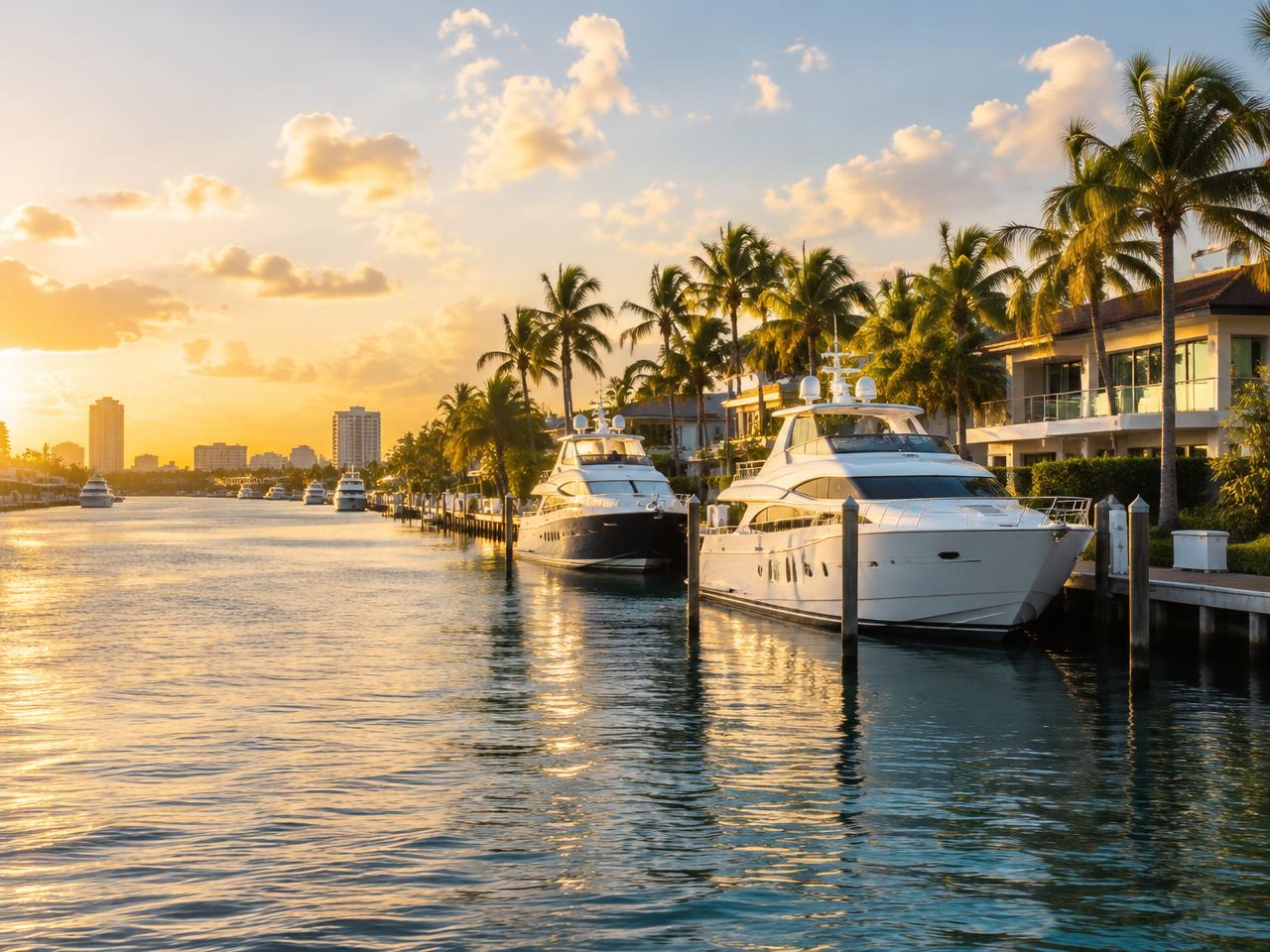
Illustrative South Florida imagery; not evidence of a listing, transaction or property condition.
The short answer
Begin with the rights and access you need, not the waterfront label. Check vessel fit, navigation, dock rights, seawall condition and address-specific insurance separately from the home's view.
A waterfront home changes the texture of an ordinary day. Morning light travels across a terrace, an evening gathering opens toward the water, and a familiar view never looks quite the same twice. Yet the finest waterfront purchase is not simply the most beautiful photograph. It is the property whose setting, construction, navigation and ownership responsibilities align with the life you actually intend to lead. In Miami and Fort Lauderdale, that requires looking beyond the word waterfront. A broad bay panorama, a protected canal setting and frontage along an active waterway offer distinctly different experiences. Before comparing finishes or negotiating a price, establish what the water must do for you: provide a view, support a boating routine, create outdoor privacy, or some combination of all three.
Bayfront, canal-front and water-view are different propositions
Bayfront homes may appeal to buyers who want an expansive horizon and an open relationship with the landscape. Canal-front properties can offer a more contained outlook, with neighboring docks, passing boats and opposite-bank homes forming part of the scene. A water-view condominium may provide an extraordinary perspective without conveying direct frontage or private dock rights. These are distinctions in ownership as much as atmosphere. Visit the outdoor spaces rather than evaluating them through glass alone. Notice wind exposure, afternoon shade, neighboring sightlines and the relationship between the pool, terrace and seawall. Ask whether the living room or primary suite actually captures the view you value. The orientation of a house can matter as much as the length of its frontage.
For boaters, begin with the vessel—not the listing
A private dock is only useful when it suits your boat and the route you expect to travel. Bring the vessel's length, beam, draft and required overhead clearance into the search from the beginning. Have a qualified marine professional verify controlling water depth, bridge clearance, turning room and the practical route to an inlet. Water levels and bridge conditions cannot be inferred from a listing description. Do not treat ocean access as synonymous with unrestricted access. Likewise, no fixed bridges, yacht-ready and deep-water should be verified rather than accepted as decorative language. Confirm dock ownership or exclusive-use rights, permitted dimensions, available power and water, and any association or municipal restrictions. A dock pictured with a large boat is not evidence that your own vessel will fit legally or comfortably.
The seawall deserves its own due diligence
The waterfront edge is infrastructure, not landscaping. Obtain a specialist inspection of the seawall and dock, review available permits and maintenance records, and ask what repair access would involve. A recently renovated interior does not establish the condition of submerged components or concealed structural elements. Broward's regional seawall guidance discusses tidal-barrier elevation using NAVD88, a surveyed elevation reference. That is not the same as measuring a wall from the lawn. Have the relevant municipality and your surveyor establish the requirements that apply to the actual parcel. Before closing, understand any proposed work, engineering needs and responsibility for future maintenance rather than relying on a generalized neighborhood rule.
Build an address-specific insurance and flood file
Miami-Dade provides address-specific flood-zone information and guidance for buyers and real estate professionals. Its floodplain resources also explain why rainfall and drainage can matter alongside coastal exposure. A tranquil canal or an elevated-looking lawn does not settle the question of risk. Request the available elevation certificate, survey, wind-mitigation information, roof details and claims documentation where obtainable. Have your insurance professional quote the specific home during the contractual review period and explain exclusions, deductibles and flood coverage separately. Compare the real carrying costs of each candidate, including insurance, dock and wall maintenance, landscaping, pools and any association obligations. The appropriate budget is the cost of keeping the property well—not merely acquiring it.
Compare Miami and Fort Lauderdale by your daily rhythm
Fort Lauderdale's canal and Intracoastal settings naturally bring boating questions into the conversation. In Miami, buyers may compare island homes, bayfront settings and canal properties in communities such as Miami Beach, Key Biscayne and Coral Gables. Within every area, access and exposure remain parcel-specific; a neighborhood name is not a navigational certification. Build a shortlist around both life on the water and life on land. Where will you work, dine and receive guests? How does the driveway function during a gathering? Does the terrace accommodate the way you entertain? Visit at more than one time of day, and evaluate activity on the water as carefully as traffic on the street. Elegant ownership should feel coherent on a Tuesday, not only on a holiday weekend.
For sellers, tell the waterfront story precisely
A compelling waterfront presentation combines emotion with evidence. Photography should show the relationship between the residence, terrace and water; floor plans should make that relationship legible. Documentation can then support the claims: survey, dock permits, seawall records and qualified navigation information where available. Precision protects the property's positioning. Describe verified frontage and documented rights rather than promising universal yacht suitability. Buyers who understand what they are acquiring can compare the property more intelligently. Whether buying or selling, the objective is the same: a beautiful waterfront story that remains persuasive when the questions become specific.
Compare the options
Direct waterfront
The property meets the water, but its infrastructure and access still need review.
Verify: Boundary, dock rights, seawall responsibility, permits and navigation for your vessel.
Water-view condominium
An outlook does not convey frontage or a private berth.
Verify: Unit exposure, building obligations and any separately documented marina entitlement.
Before you decide
- Record vessel length, beam, draft and overhead clearance; have a marine professional verify the route and controlling conditions.
- Confirm dock ownership or exclusive-use rights, permitted dimensions, utilities and restrictions.
- Request specialist seawall and dock inspections, available permits and maintenance records.
- Obtain survey and available elevation information; secure address-specific insurance advice during the contractual review period.
Use these questions with the professionals handling your property. General guidance is not a valuation, inspection, legal opinion or guarantee.
Frequently asked questions
Does every waterfront home have ocean access?
No. Frontage, navigable access, bridge clearance and dock rights are separate matters. Verify the complete route and property rights with qualified local professionals before relying on a boating claim.
What should I inspect beyond the house?
Ask for specialist review of the seawall and dock, permit records, a current survey, available elevation information and property-specific insurance quotes. Match the dock and navigation route to your actual vessel.
Is a waterfront view a guarantee of future value?
No. Value depends on the specific property, condition, comparable sales, ownership costs and market circumstances. A compelling setting is one part of the analysis, not a return guarantee.
Explore the neighborhoods
Sources & further reading
These references support the topics discussed, not a claim that every property or current requirement has been verified. Operations, access, offerings and building policies can change; confirm current details with the relevant authority or provider.
Continue reading
Your next step
Compare the homes and ownership questions that matter to your own search.